 USA
USA The Home As A Health Environment When You're Short on Time
When time is tight, the home as a health environment works best as small actions folded into what you already do. The focus is on habits you can actually keep, not a short-lived push. The rest of this article walks through the home as a health environment step by step, in plain language.
The time-poor reality
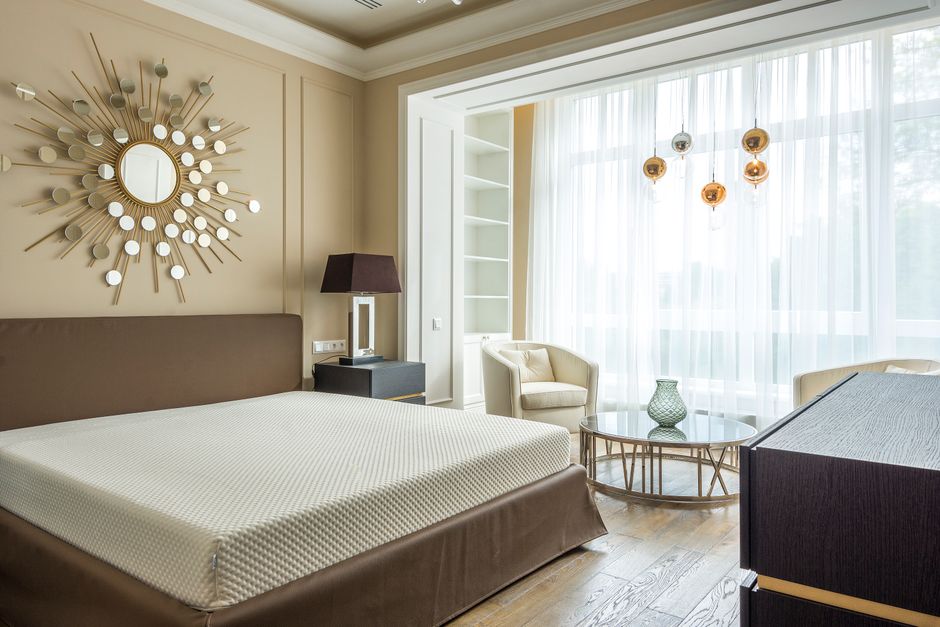
Sleep first. A bedroom that is dark, quiet, and slightly cool supports the physiology of sleep more effectively than any technique practised in a bright, warm one. Removing the phone removes both the light and the temptation. Reserving the bed for sleep strengthens the association between the two.
What matters most is fitting this around your real routine, so it becomes something you barely have to think about.
Quick wins that fit any schedule
The kitchen determines much of what is eaten, largely through visibility and effort. What is on the counter gets eaten. What requires ten minutes of preparation gets eaten less than what requires none. Stocking the things that are useful — frozen vegetables, tinned pulses, eggs, oats — and not stocking the things that are eaten only because they are present is more effective than any resolution about self-control.
Small changes like these are easy to underestimate, yet they are exactly what add up over months and years.
Habits that take seconds
In practice, light through the day counts. Working near a window, opening curtains early, and keeping the evening dim aligns with the body's own signalling.
The goal is progress you can maintain, not perfection you have to chase and eventually abandon.
Doing less, but consistently
Space for movement need not be a gym. A clear patch of floor, a chin-up bar in a doorway, or a bag of something heavy is enough to make a five-minute intervention possible on a day when leaving is not. For evidence-based detail, MedlinePlus (National Institutes of Health) offers helpful guidance.
Small changes like these are easy to underestimate, yet they are exactly what add up over months and years.
Protecting the little time you have
Put simply, air quality, damp, mould, and noise have measurable effects on respiratory health and sleep and are frequently tolerated far longer than they should be. It is worth checking supplement before deciding.
Give yourself room to be imperfect here; a missed day is an event, not a reason to give up.
Making it automatic
On a day-to-day level, finally, a home should contain somewhere to be still. Not a project, not a screen, not a place associated with work. Somewhere with a chair, a window, and nothing that demands anything. Most homes have been optimised for entertainment and storage. Very few have been arranged for rest, which is what they are principally for.
The time-poor reality
On a day-to-day level, a home is where the majority of sleeping, a good deal of eating, and much of the recovering happens. Its arrangement therefore exerts a continuous influence that no weekly intervention matches.
The goal is progress you can maintain, not perfection you have to chase and eventually abandon.
Practical tips
A few simple things tend to help:
- Keep the useful option easy to reach and the tempting one a little harder.
- Ask for a little support from someone around you when you can.
- Anchor a new habit to something you already do each day, like your morning coffee.
- Protect your sleep, since it quietly makes everything else easier.
The bottom line
None of this needs to be perfect. The best approach is the one you can keep going with. Start where you are and build slowly from there.
Frequently asked questions
Is this relevant if I'm just starting out?
Yes. You can begin with one small change and build from there. With the home as a health environment, steady progress beats trying to do everything at once.
Do I need special equipment or money?
No. Most of what helps is free or low-cost, and the simplest options are usually the ones people stick with.
How long before I notice a difference?
It varies from person to person. Give any new habit a few weeks of consistency before deciding whether it is working for you.
What is the single most important thing to focus on?
Consistency. A modest routine you actually keep beats an ambitious plan you abandon after a week.